


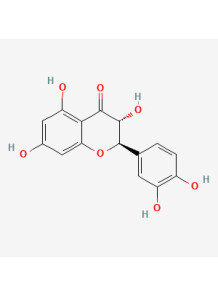
Flavonoid compounds found in many plants, fruits, and vegetables. It is a dihydro derivative of quercetin, a well-known antioxidant and anti-inflammatory agent.
Dihydroquercetin (taxifolin) is a flavonoid compound found in many plants, fruits, and vegetables. It is a dihydro derivative of quercetin, a well-known antioxidant and anti-inflammatory agent.
There have been some studies done on the health benefits of dihydroquercetin. which suggests it might be useful, such as:
Anti-inflammatory: Dihydroquercetin has been found to have anti-inflammatory properties. This may be beneficial in treating conditions such as rheumatoid arthritis. Osteoarthritis and inflammatory bowel disease
Antioxidant: Dihydroquercetin It has antioxidant properties that may help protect the body from damage caused by free radicals.
Anticancer Properties: Dihydroquercetin It has been found to have anti-cancer properties. This has been shown to inhibit the growth of cancer cells in laboratory studies.
Cardiovascular Health: Dihydroquercetin Beneficial to the heart and blood vessels Lower blood pressure Improves endothelial function and reduces the risk of heart disease.
Antiviral Properties: Dihydroquercetin It has been found to have antiviral properties. It has been shown to inhibit HIV-1 virus replication in laboratory studies.
Currently, the FDA has not allowed this product to be used in dietary supplements. Used for research experiments For future food only
| Test Name | Specification |
|---|---|
| Appearance | Light yellow to off-white powder |
| Assay | =>98.0% |
| Odor | Characteristic |
| Loss on drying | =<5.0% |
| Ash | =<5.0% |
| Pb | =<2.0 ppm |
| Cd | =<1.0 ppm |
| As | =<2.0 ppm |
| Hg | =<1.0 ppm |
| Total Plate Count | <1000 cfu/g |
| Yeast and Mold | <100 cfu/g |
| E. coli | Absent |
| Salmonella | Absent |
| S.aureus | Absent |
No products
Flavonoid compounds found in many plants, fruits, and vegetables. It is a dihydro derivative of quercetin, a well-known antioxidant and anti-inflammatory agent.
Dihydroquercetin (taxifolin) is a flavonoid compound found in many plants, fruits, and vegetables. It is a dihydro derivative of quercetin, a well-known antioxidant and anti-inflammatory agent.
There have been some studies done on the health benefits of dihydroquercetin. which suggests it might be useful, such as:
Anti-inflammatory: Dihydroquercetin has been found to have anti-inflammatory properties. This may be beneficial in treating conditions such as rheumatoid arthritis. Osteoarthritis and inflammatory bowel disease
Antioxidant: Dihydroquercetin It has antioxidant properties that may help protect the body from damage caused by free radicals.
Anticancer Properties: Dihydroquercetin It has been found to have anti-cancer properties. This has been shown to inhibit the growth of cancer cells in laboratory studies.
Cardiovascular Health: Dihydroquercetin Beneficial to the heart and blood vessels Lower blood pressure Improves endothelial function and reduces the risk of heart disease.
Antiviral Properties: Dihydroquercetin It has been found to have antiviral properties. It has been shown to inhibit HIV-1 virus replication in laboratory studies.
Currently, the FDA has not allowed this product to be used in dietary supplements. Used for research experiments For future food only
| Mechanism | - |
| Appearance | - |
| Longevity | - |
| Strength | - |
| Storage | - |
| Shelf Life | - |
| Allergen(s) | - |
| Dosage (Range) | - |
| Recommended Dosage | - |
| Dosage (Per Day) | - |
| Recommended Dosage (Per Day) | - |
| Mix Method | - |
| Heat Resistance | - |
| Stable in pH range | - |
| Solubility | - |
| Product Types | - |
| INCI | - |