


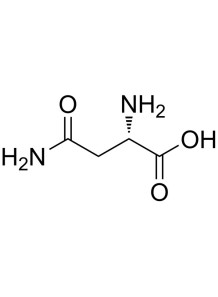
non-essential amino acids This means that the body can synthesize it on its own. Although L-asparagine is not generally considered essential in the diet due to the body's ability to produce it, But it plays many roles in maintaining health
L-AsparagineL-Asparagine It is a non-essential amino acid. This means that the body can synthesize it on its own. Although L-asparagine is not generally considered essential in the diet due to the body's ability to produce it, But it plays many roles in maintaining health:
Protein synthesis: It is the building block of protein. Involved in the synthesis of proteins that are essential for the structure and function of tissues, organs, enzymes, and the immune system.
Neurotransmitter Function: L-Asparagine It is a precursor to aspartate. which involves the synthesis of neurotransmitters in the brain Neurotransmitters are chemicals that transmit signals between nerve cells and are important for proper brain function.
Ammonia Detoxification: L-Asparagine Related to the urea cycle which plays a role in detoxifying ammonia which is a waste product produced during the breakdown of protein The urea cycle helps convert ammonia into urea. which can be excreted through the kidneys
Cellular activity: L-asparagine Is important to the functioning of various cells. Including maintaining the structure and integrity of cells. Helps balance absorption within cells and helps control cell volume.
Immune system support: Amino acids, including L-asparagine. Plays a role in supporting the immune system Involved in the production of antibodies and other components. of the immune system response
Energy Metabolism: L-Asparagine It contributes to energy metabolism by participating in the citric acid cycle. which is a series of chemical reactions that occur in cells to create energy from nutrients
| Test Name | Specification |
|---|---|
| Appearance | White crystals or crystalline powder |
| Assay (%) | 99-101 |
| pH | 4.4-6.4 |
| Specific rotation (a)D20 | +34.3 degree to +36.5 degree |
| Transmittance (%) | 98 Min |
| Chloride (%) | 0.02 Max |
| Ammonium (NH4+) (%) | 0.10 Max |
| Sulfate (SO4) (%) | 0.02 Max |
| Iron | 10ppm Max |
| Heavy metals | 10ppm Max |
| Arsenic | 1ppm Max |
| Other amino acids | Conforms |
| Loss on drying (%) | 11.5-12.5 |
| Residue on ignition (%) | 0.1 Max |
No products
non-essential amino acids This means that the body can synthesize it on its own. Although L-asparagine is not generally considered essential in the diet due to the body's ability to produce it, But it plays many roles in maintaining health
L-AsparagineL-Asparagine It is a non-essential amino acid. This means that the body can synthesize it on its own. Although L-asparagine is not generally considered essential in the diet due to the body's ability to produce it, But it plays many roles in maintaining health:
Protein synthesis: It is the building block of protein. Involved in the synthesis of proteins that are essential for the structure and function of tissues, organs, enzymes, and the immune system.
Neurotransmitter Function: L-Asparagine It is a precursor to aspartate. which involves the synthesis of neurotransmitters in the brain Neurotransmitters are chemicals that transmit signals between nerve cells and are important for proper brain function.
Ammonia Detoxification: L-Asparagine Related to the urea cycle which plays a role in detoxifying ammonia which is a waste product produced during the breakdown of protein The urea cycle helps convert ammonia into urea. which can be excreted through the kidneys
Cellular activity: L-asparagine Is important to the functioning of various cells. Including maintaining the structure and integrity of cells. Helps balance absorption within cells and helps control cell volume.
Immune system support: Amino acids, including L-asparagine. Plays a role in supporting the immune system Involved in the production of antibodies and other components. of the immune system response
Energy Metabolism: L-Asparagine It contributes to energy metabolism by participating in the citric acid cycle. which is a series of chemical reactions that occur in cells to create energy from nutrients
| Mechanism | - |
| Appearance | - |
| Longevity | - |
| Strength | - |
| Storage | - |
| Shelf Life | - |
| Allergen(s) | - |
| Dosage (Range) | - |
| Recommended Dosage | - |
| Dosage (Per Day) | - |
| Recommended Dosage (Per Day) | - |
| Mix Method | - |
| Heat Resistance | - |
| Stable in pH range | - |
| Solubility | - |
| Product Types | - |
| INCI | - |